
The Integrated Coach
Artificial Intelligence will handle the repetitive work; the human coach will bring judgment, context, and humanity” - Gabriel Della Mattia

I have followed Gabriel Della Mattia since 2016, almost 10 years.
At first through his opinions, later his writing and tech development for endurance performance, later through conversations with athletes who trained under him. He is based in Argentina, thousands of kilometers away from me, but his ideas travel fast.
I first noticed his work few years before I went and raced Ironman Mar del Plata in Argentina. Some of his athletes were there. Actually he was there, but I could not manage to meet with him. His athletes were in a different mindset, you could notice. They moved with purpose. When a coach builds systems thinking into a triathlon community: it shows.
From the start, Gabriel brought an engineering mindset into endurance sport. Today he blends humans and technology with precision and calm.
He connects research, software and real human coaching. He thinks in systems and acts in the real world. Pragmatic. Grounded. No theory for theory sake.
Over the years, I’ve learned a lot by watching Gabriel’s evolution.
His work has shaped how I coach and how I train: in a deeply positive way.
In this piece, I’ll share what I’ve learned from him, the conversations we’ve had, and why his approach matters far beyond sport performance.
I’ll also give you a simple, practical blueprint you can apply to your own health or endurance journey: built from his software, teaching and research, combined with what I’ve discovered through experience.
Who is Gabriel?
Gabriel is trained as both an electronic engineer and a software engineer. He is part engineer, part scientist, part teacher, part writer and full time endurance coach in all the extension of this word.
Early in his career he programmed systems; later he began applying that same logical structure to human performance. Most coaches build training plans, go science or pragmatism or a wire combination of both. Gabriel builds ecosystems, that is where he shines.
He runs AGMT2 Team, his coaching collective and EDNACORE AI, his technology company.
These 2 worlds feed each other.
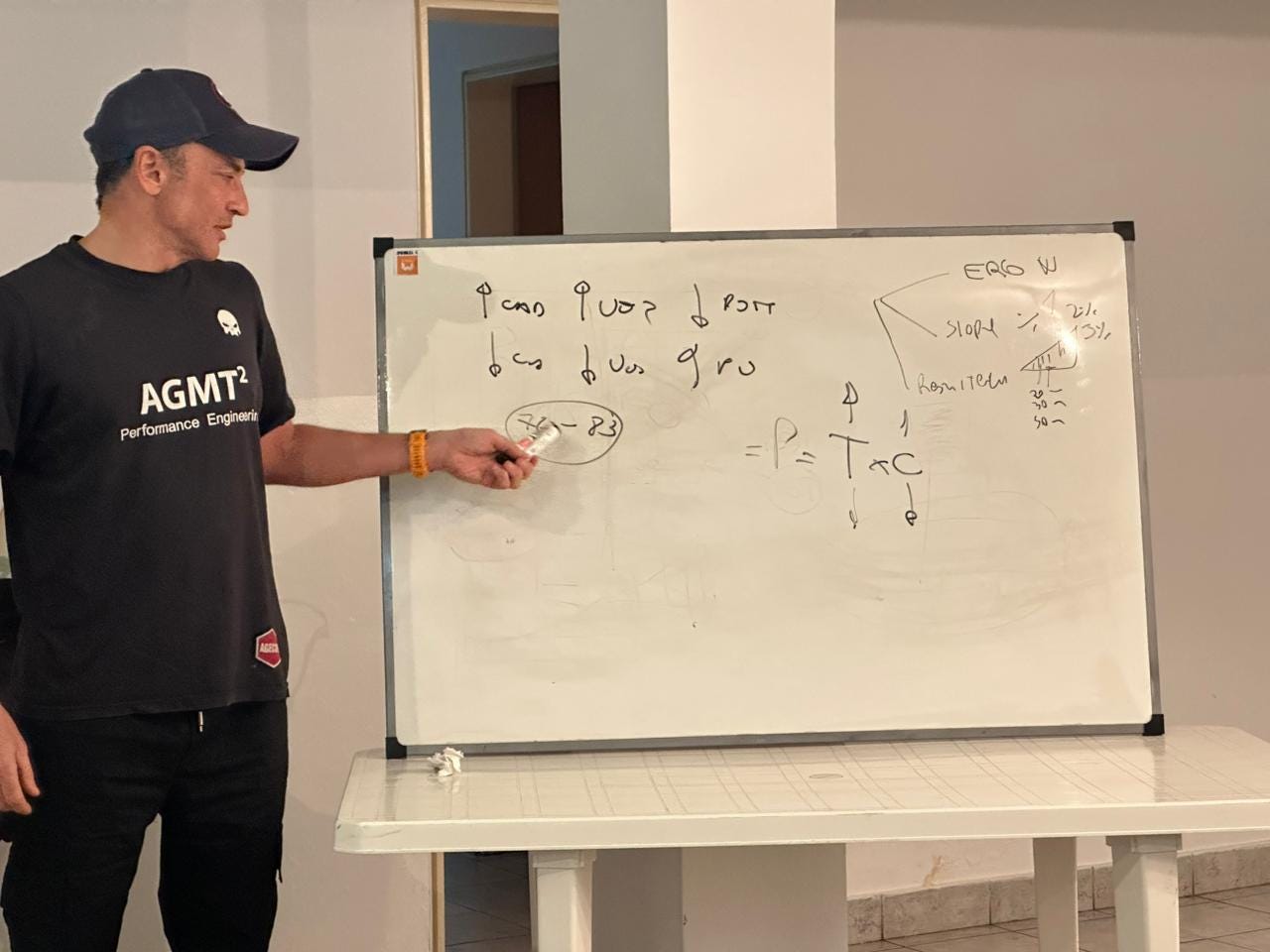
The athletes supply real-world data and the tech side builds tools and AI models that interpret that data to improve training decisions.
It is a complete feedback loop: research → application → refinement → learning
All with the best of the AI and the best of the human coaching.
What sets him apart is integration.
Most coaches stay in one lane: coach, scientist or developer. He crosses them all. He codes, coaches, travel to races with his athletes, do training camps, writes and tests.
His output is not a theory; it is working athletes performing consistently.
From Engineering to Endurance
Engineering taught him that complex systems can’t be explained by 1 variable.
A machine is not defined by temperature alone or voltage alone, it’s defined by relationships among components. The same is true for humans.
Most athletes still chase single numbers: pace, power, heart rate, TSS. That’s fine for tracking, but it’s incomplete.
Gabriel calls this “the move from scalars to tensors”, meaning: from one-dimensional to multi-dimensional understanding. Training isn’t about a single data stream; it’s about how sleep, nutrition, stress and effort interact in the human performance.
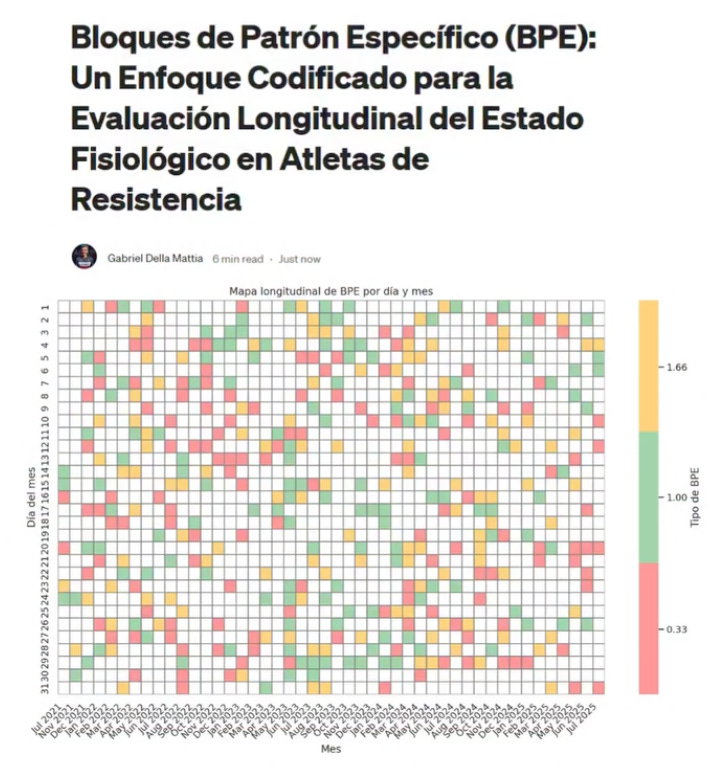
Once you start thinking like this, everything changes. You stop asking: “Was my FTP higher?” and start asking “How did my system adapt this week?”
You realize that fatigue on Wednesday may come from a hard meeting on Monday, not just from intervals on Tuesday.
That’s how Gabriel works: observe, model, adjust. With true feedback loops. All rounded with technology and human interaction.
Systems Thinking in Practice
Systems thinking means connecting dots that most people separate. For Gabriel, there’s no border between training and life. Life stress equals load.
The body doesn’t distinguish whether cortisol came from a family, work or from hill repeats; it’s still stress.
His athletes learn to balance inputs instead of chasing volume.
They use tools to monitor the whole organism, like:
HRV
Sleep data
Subjective feedback
They learn when to push and when to back off. They learn that adaptation happens only when the system has space to respond.
You can see the result on race day: athletes who look calm, controlled, and ready, never desperate. They’ve practiced system regulation for months.
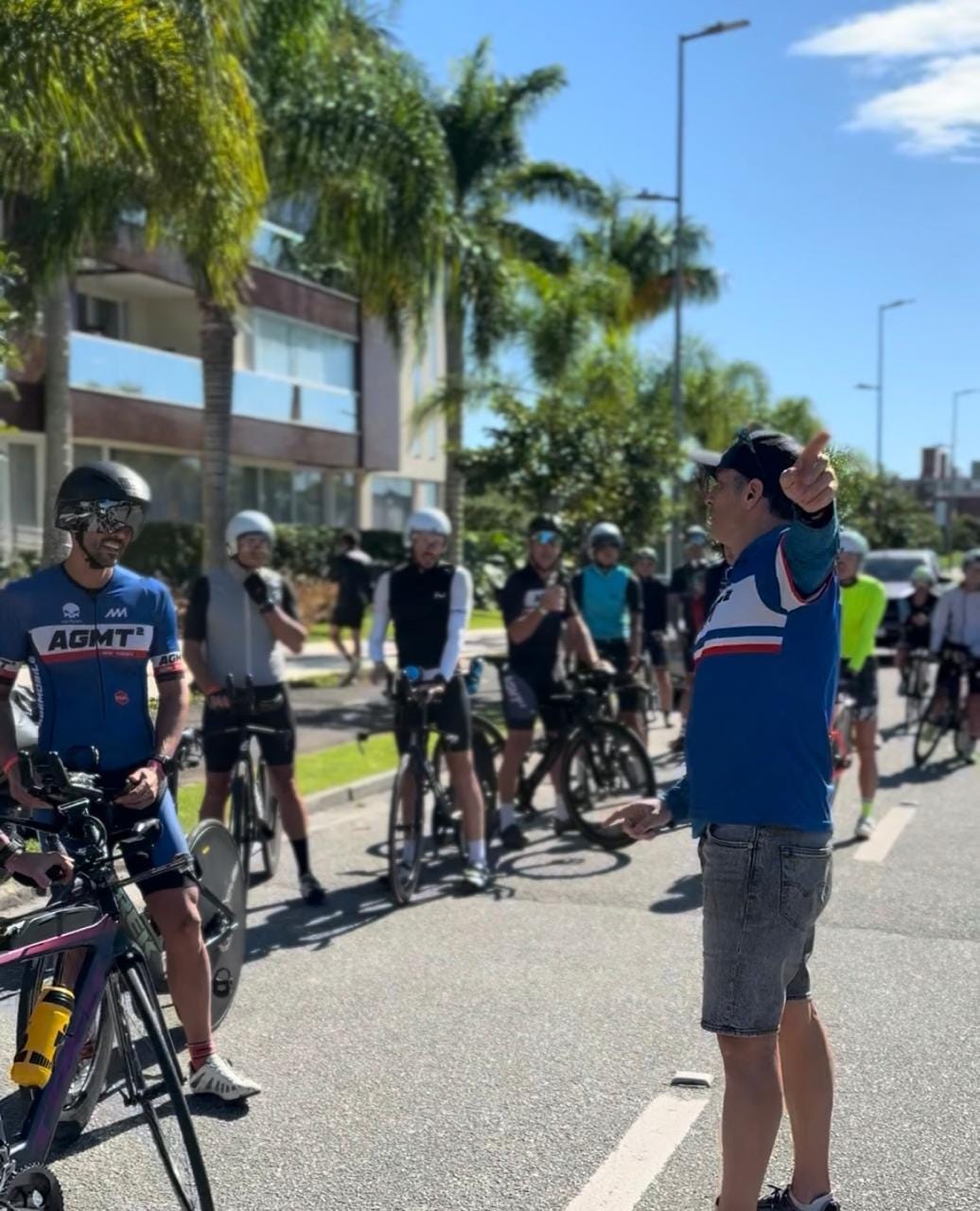
The lesson is simple: If you manage the system, the outcomes take care of themselves.
Artificial Intelligence as a Mirror
Gabriel builds AI models to understand athletes, not to replace coaches.
In a project with a professional cycling team, his algorithm predicted optimal pacing for a mountain stage. Riders who followed the AI-based pacing outperformed those who relied purely on intuition.
But here’s what makes Gabriel different: he still values human intuition more than automation. AI is a mirror, not a master. It reflects patterns we might miss; it doesn’t make the decision for us.
His approach is human-centered technology: tools that amplify awareness.
Data + Dialogue = Development.
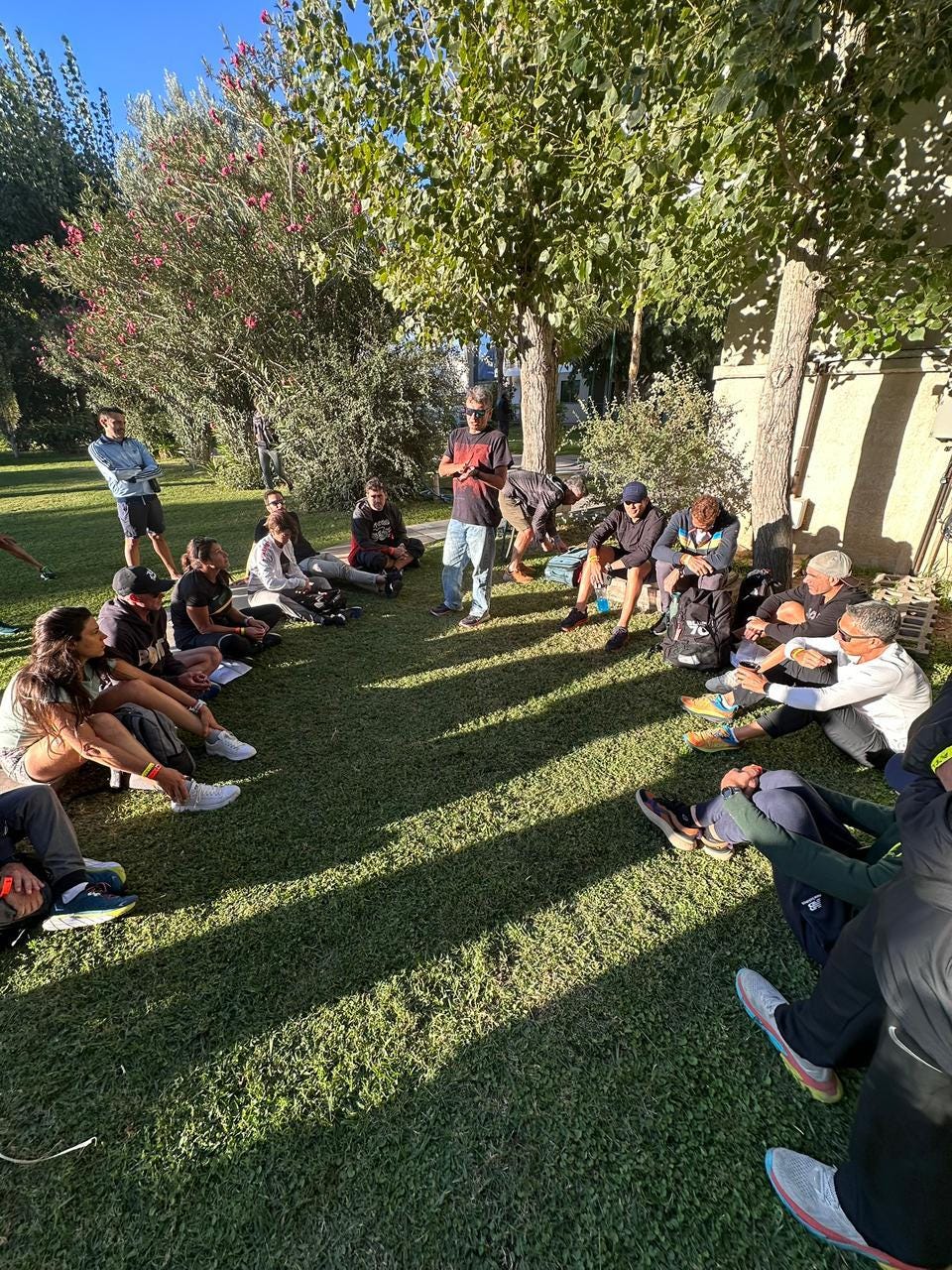
For amateur athletes, it means using tools like watches, HRV apps, or power meters to understand their body instead of following them blindly. The device gives feedback, not orders. This is exactly where Gabriel athletes, and his work as both a coach and technology developer, stand out.
Technology becomes valuable only when it helps you understand yourself.
A Different View of Training Load
Gabriel repeats one key idea: training load is not only physical.
You have mechanical load (watts, pace), metabolic load (energy cost), psychological load (focus, stress) and social load (environment). Ignoring any of these leads to mistakes.
He quantifies them through different data layers: heart rate variability, sleep metrics, workload indexes, but also through subjective reports or RPE as many of us know.
He encourages athletes to rank mood, motivation, and perceived fatigue daily. Numbers and emotions side by side.
When I started applying this in my own coaching, I saw the same pattern. Athletes who reported life stress early avoided deeper fatigue later. Those who ignored it ended up injured or burned out.
Field Data Over Perfection
During the pandemic, when everyone trained indoors, Gabriel noticed how easy it was to collect clean data and how dangerous that can be.
Indoor numbers are stable but not complete; the real world adds heat, wind, traffic, and emotion.
He prefers imperfect but real data to perfect isolation. The field reveals what truly works.
For athletes, it’s a reminder that progress isn’t hidden in a number. Data helps you understand trends, but it doesn’t define your effort, mindset, or adaptation. For coaches, that’s a reminder: your athlete isn’t a spreadsheet. Numbers are starting points, not final truths.
Bridging Coaching, Coding and Curiosity
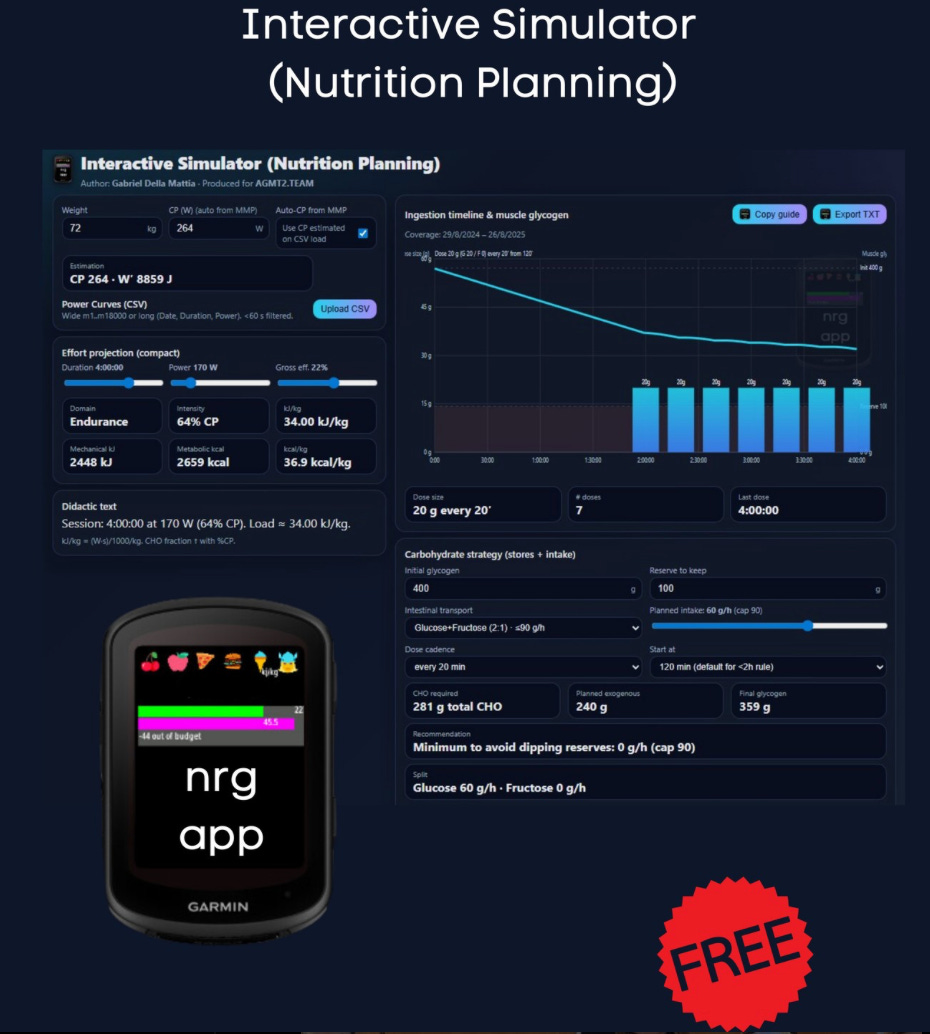
If you look at his public projects, you see the same pattern. He develops open-source scripts to estimate core temperature from Garmin data, visualizes fatigue trends, and shares WKO dashboards freely. He wants coaches to learn, not depend.
That openness builds community. It’s not about followers; it’s about shared understanding.
This is one of the main reasons I am actively sharing this with you, because somehow Gabriel is quiet on his work and there is so much athletes and coaches can learn form him, particularly in this field.
When I look at his career, I see a model for how high-level professionals might work in the next decade: hybrid profiles that combine human insight, data literacy, and curiosity.
The Blueprint
Here’s a version of Gabriel philosophy that I have adapted so you can apply it.
Use it as a map, not a rulebook. Adjust it to your own context.
Keep reading with a 7-day free trial
Subscribe to Iñaki’s de la Parra Substack to keep reading this post and get 7 days of free access to the full post archives.